
The Shared Breath: Co-Regulation and Polyvagal Theory in the Blarney Community Choir
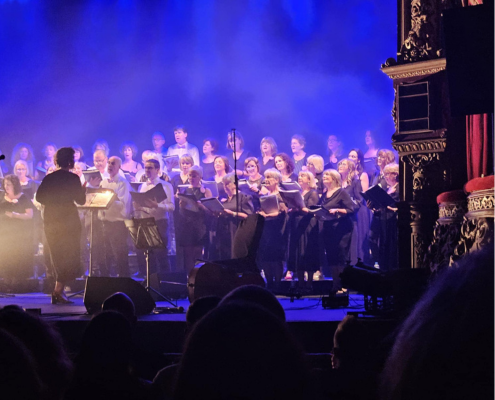
In this guest post, Anna Mitchell explores the transformative power of the Blarney Community Choir, revealing how communal singing serves as a biological bridge to deep human connection. By blending her musical journey with the science of Polyvagal Theory, she illustrates how co-regulation and the “shared breath” allow us to settle our nervous systems in unison. Discover why group singing is more than just a hobby, it is an essential practice for belonging, resilience, and finding our way back to ourselves …
Co-Regulation and Polyvagal Theory in Action
Singing, and teaching others to sing together, has quietly shaped my life in ways I only understand now. For years I didn’t have the language for it. I didn’t know that what I was doing was co-regulation, that it was polyvagal theory in action. All I knew was that I craved my choir each week. I needed it. We all needed it. No matter what chaos or heaviness we carried into the room, something happened once we stood shoulder to shoulder and took our first shared breath.
As the rehearsal unfolded, whatever else was happening in our lives seemed to fade into the background. Our collective shoulders softened. Our breathing began to sync. Our voices, once tentative and separate, became one sound. In that moment we weren’t just singing; we were congregating, regulating our nervous systems together, and bettering ourselves without even trying. Elton John captured this truth perfectly when he said, “Music has healing power. It has the ability to take people out of themselves for a few hours.” I would add that it also brings us back to ourselves, and to each other.
I saw this long before I understood the science. In my early twenties, playing in bands, we lived for late nights, loud rooms, and the odd questionable decision. There were times when we arrived at a gig running on very little sleep, heads pounding, bodies wrecked from the night before. Yet somehow, once we plugged in and started playing, the hangover loosened its grip. The music lifted us as a band, almost like a cure. Looking back now, it’s obvious: shared rhythm, shared focus, shared joy. Polyvagal theory, again, doing its quiet work.
Anchoring in Community
Community music-making has only deepened that understanding. My work with the Blarney Community Choir has brought immense joy into my life. Our Monday night rehearsal is an essential anchoring point in my week, not just for me but for everyone who walks through the door. It’s a space where nervous systems settle, where people feel seen and heard, where connection is tangible.
Some of the best moments of my life have been polyvagal theory in action: choir rehearsals filled with breath and harmony, live gigs where bandmates lock in together, standing in a crowd of a thousand people singing along at a concert. These moments remind me, again and again, that music isn’t just sound. It’s connection, regulation, and belonging—and it has helped carry me through my life.







Leave a Reply
Want to join the discussion?Feel free to contribute!